
As we move through 2026, the “Islands of Tahiti” are trending not just for their legendary overwater bungalows, but for a new era of sustainable, soul-deep travel. The world is finally looking past the postcard to the vibrant, living culture beneath. If you’re planning to cross this off your bucket list, here is the professional traveler’s guide to doing it right.
Why French Polynesia? The “Mana” of the Islands
Why fly halfway across the world for some sand and water? Because the lagoons here are unlike anything else on Earth. In French Polynesia, they speak of “Mana”—a spiritual life force that permeates the universe. It is an intentional energy that connects the volcanic peaks to the coral floors.
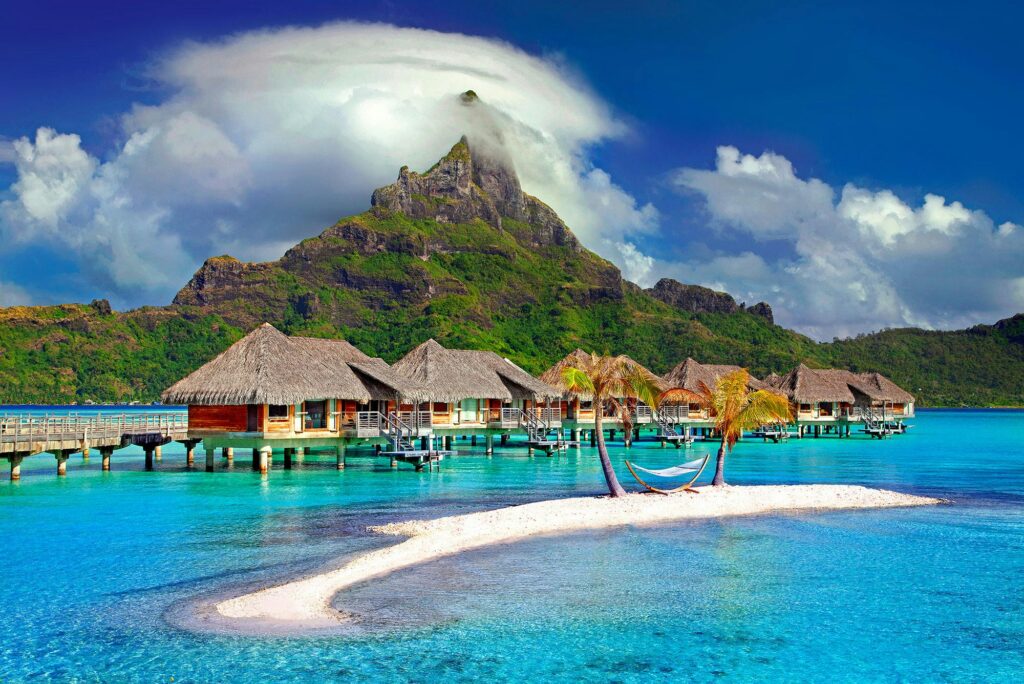
You feel it when you’re swimming in a 50-shades-of-blue lagoon in Bora Bora or standing under a 100-foot waterfall in Tahiti’s Papenoo Valley. It is an island chain that is “vibrantly healing.” Whether you are in a $5,000-a-night suite or a family-run pension, the hospitality is rooted in genuine Polynesian warmth. Unlike other luxury hubs where service can feel transactional, here it feels like being welcomed into a home.
118 Islands, Five Archipelagos
To understand the “why,” you must understand the scale. French Polynesia is spread over an area the size of Europe.
- Society Islands: The icons (Tahiti, Moorea, Bora Bora). High volcanic peaks and lush jungles.
- Tuamotu Archipelago: The atolls (Rangiroa, Fakarava). Flat rings of coral with massive lagoons.
- Marquesas Islands: The “Land of Men.” Rugged, no reefs, and deep cultural roots.
- Austral and Gambier Islands: The remote frontiers, perfect for whale watching and off-the-beaten-path solitude.
📅 When to Go: Timing Your Escape
The tropical climate is generally divided into two seasons, but as a pro, I recommend the “shoulder months” to balance weather, crowds, and cost.
- Dry Season (May – October): This is the “Austral Winter.” It offers the most stable weather—sapphire skies and crisp air.
- Pro Tip: September is the gold mine. It is the peak of humpback whale season (July–Nov), the water is clear for diving, and the madness of the July Heiva festival has subsided.
- Wet Season (November – April): Expect humidity and “tropical drama”—short, intense bursts of rain followed by blinding sun.
- Pro Tip: Travel in February for the best deals. You’ll save up to 30% on luxury resorts. Just ensure your accommodation has high-quality A/C, as the humidity can be taxing.
- The “Sweet Spot” (April, May, & October): These are the transition months. You get a high probability of great weather with mid-range pricing.
💰 Cost Estimation: A Realistic Breakdown
Let’s debunk the myth: you don’t need to be a billionaire, but you do need a strategic plan. French Polynesia is roughly 40% more expensive than mainland France due to import costs.
| Tier | Estimated Daily Budget (Per Person) | What You Get |
| Budget | $150 – $250 | Guesthouses (pensions), eating at roulottes, and self-guided hikes. |
| Mid-Range | $400 – $700 | 4-star boutique hotels, beach bungalows, and 2-3 guided lagoon tours. |
| Luxury | $1,200+ | Overwater bungalows, private boat charters, and fine dining. |
The “Hidden” Costs
- International Flights: Flights to Faa’a International Airport (PPT) range from $800 (from US West Coast) to $2,500 (from Europe).
- Inter-Island Travel: This is the “silent killer” of budgets. A single flight between islands can cost $200-$400.
- Pro Move: Buy an Air Tahiti Multi-Island Pass. It allows you to visit 4-5 islands for a fixed price (usually around $450-$600), making island hopping actually affordable.
🏨 Accommodation: From Floating Palaces to Family Homes
In 2026, the trend has shifted toward “Eco-Luxury” and “Authentic Stays.”
1. The Overwater Bungalow (The Splurge)
French Polynesia invented these. If you’re going to do it, do it in Bora Bora or Taha’a.
- The St. Regis Bora Bora: Known for the largest standard overwater villas in the Pacific.
- Le Taha’a by Pearl Resorts: Offers a more “traditional” feel and incredible views of Bora Bora across the water.
2. Tahitian Guesthouses / Pensions (The Authentic Choice)
These are the heart of the islands. You stay in a family-run lodge, often on a private motu (islet).
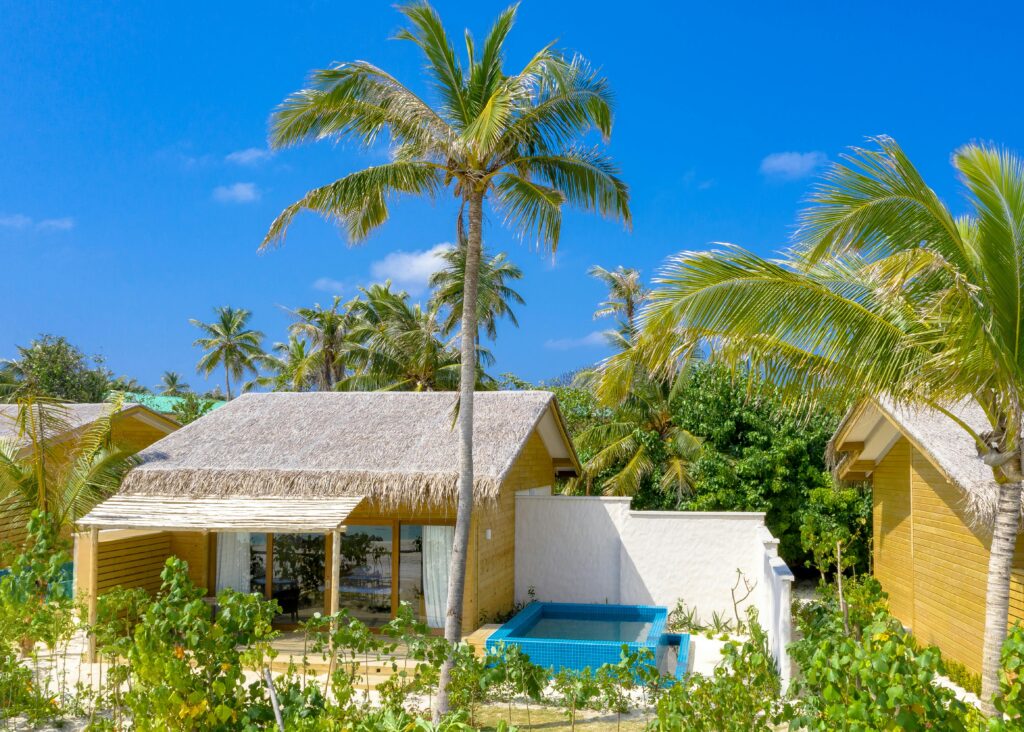
- Why: You get home-cooked meals (often included in the “half-board” price) and local tips you won’t find on any travel site.
- Expect to pay: $100–$250 per night.
3. Sustainable Eco-Lodges (The Future)
The Brando on Tetiaroa is the world leader here. It’s carbon-neutral, uses deep-sea water for cooling, and supports a massive turtle conservation program. It’s expensive, but it’s the blueprint for 21st-century travel.
🚣 Activities: What to Actually Do
Don’t fall into the trap of just sitting on your balcony. The “Mana” is found in movement.
Underwater Wonders
- Drift Snorkeling (Fakarava & Rangiroa): This is the world’s best diving/snorkeling. You drop into the “pass” (the opening in the reef) and the incoming tide carries you into the lagoon. You’ll glide past hundreds of grey reef sharks and manta rays. It’s like being in an underwater IMAX movie.
- Whale Swimming: French Polynesia is one of the few places where you can legally swim with humpback whales. Go to Moorea or the Austral Islands for this life-changing encounter.
Land Adventures
- 4×4 Safari Tours: In Moorea, take a tour into the interior. You’ll see the Belvedere Lookout (the view between Cook’s Bay and Opunohu Bay), ancient stone temples (marae), and pineapple plantations.
- Hiking Mont Aorai: For the serious trekker, this is a 20km round trip on Tahiti. It’s challenging, but the ridge-line views above the clouds are ethereal.
Cultural Immersion
- The Roulottes of Papeete: Head to Place Vai’ete at 6:00 PM. Dozens of food trucks serve everything from Poisson Cru (raw fish in coconut milk) to Chinese Chao Men. It’s the best social scene on the island.
- Tattooing: The word “Tattoo” comes from the Tahitian “Tatau.” Getting a traditional piece here is a rite of passage for many travelers.
🎒 Pro-Traveler Tips (The “15-Year” Secret Sauce)
After a decade and a half of travel, these are the small details that make a big difference:
- Reef-Safe Sunscreen is Mandatory: The coral is fragile. In 2026, many islands have strict regulations. Buy “Reef-Safe” before you arrive; it’s twice the price in the hotel gift shop.
- The Sunday “Dead Zone”: Sundays are for family and church. Almost everything closes. Use Sundays for boat rentals or relaxing at your resort, and do your grocery shopping on Saturday.
- The “Baguette Rule”: Thanks to the French influence, you can find world-class baguettes for less than $1 at any Magasin (small grocery store). Pair it with some local fruit and brie for a $10 five-star lunch.
- Drink the Water (Mostly): Tap water is safe in Papeete and Bora Bora, but always check with your host on the remote atolls where they rely on rainwater tanks.
- Pack Light, Pack Smart: Inter-island planes have strict weight limits (usually 23kg for checked bags and 5kg for carry-ons). Wear your heavy hiking shoes on the plane.
- Learn the Language: * Ia Ora Na (Yo-rah-nah) — Hello
- Māuruuru (Mah-roo-roo) — Thank you
- Nana — Goodbye
The 2026 Sustainability Trend: Fari’ira’a Manihini 2027
The government has launched a roadmap to make French Polynesia the world leader in inclusive tourism. They are moving away from “Mass Tourism” and toward “High Value” travel. This means you might see more “Tourist Taxes” or capped visitor numbers at popular spots. Don’t let this deter you; it ensures that the paradise you are visiting today will still be a paradise for your grandchildren.
Final Verdict: Is it worth it?
French Polynesia has fought hard to remain authentic. It is expensive, it is far, and it is humid—but the moment you step off the plane and smell the tiare flowers in the air, you will understand. It’s not just a vacation; it’s a recalibration of what it means to be alive. Whether you are looking for the high-octane adventure of Moorea’s peaks, the silent luxury of a Tetiaroa villa, or the underwater marvels of Fakarava, the islands are calling. In a world that feels increasingly crowded and loud, the “The Islands of Tahiti” offer a quiet, turquoise breath of fresh air.
if you are interested to visit USA here is a blog in detail about it : Best Time to Visit the USA: Month-by-Month Travel Guide
If you are visiting Italy for the first time read this: 🇮🇹 Italy Travel Guide 2026: The Ultimate First-Timer’s Itinerary
If you need full guide about French Polynesia visit: How to take a solo trip in Tahiti & French Polynesia – Lonely Planet
This video provides a practical, high-quality visual walkthrough of a multi-island itinerary, including budget tips and real-world footage of the transport and accommodation options mentioned above.